
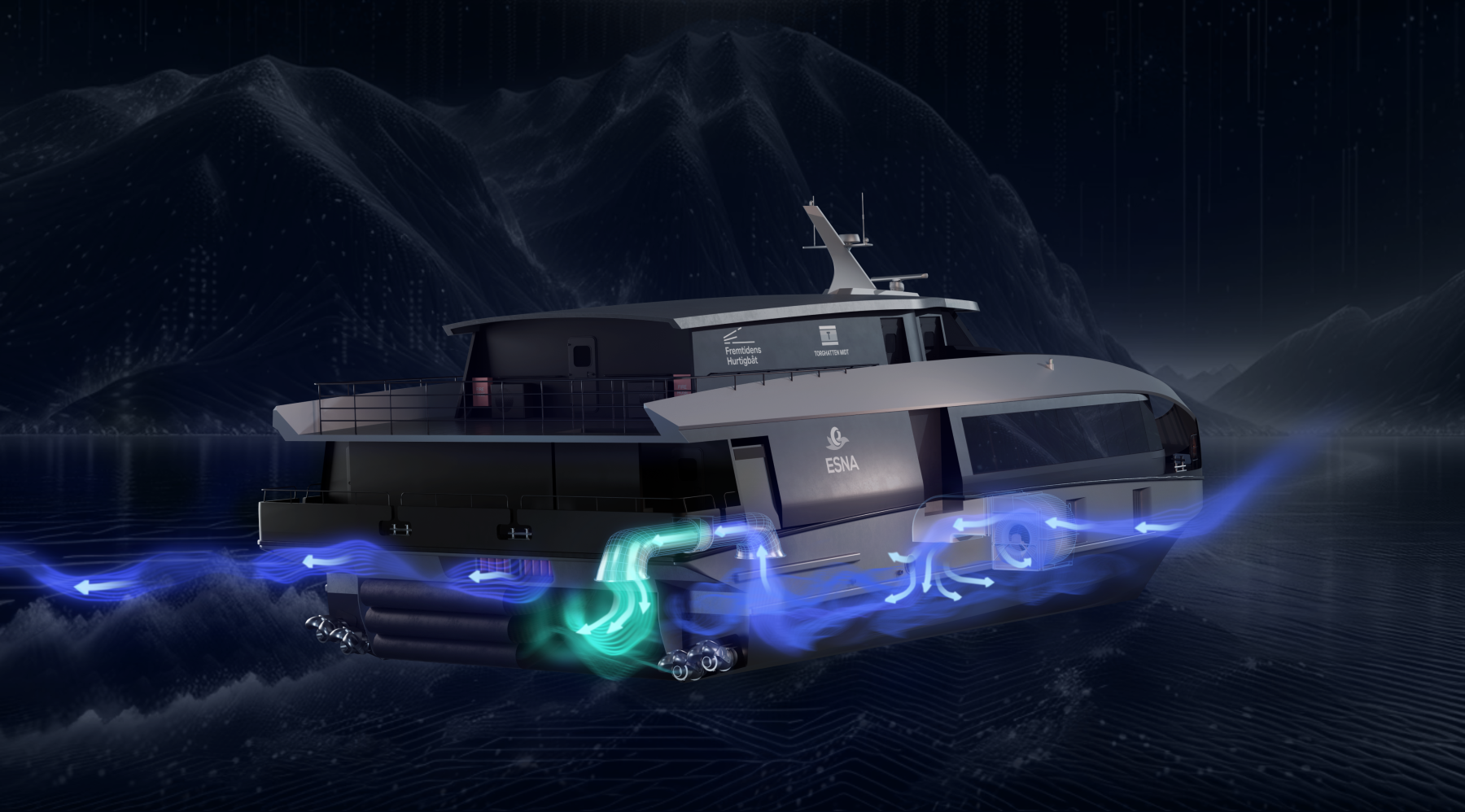
A Surface Effect Ship (SES), is a high-speed craft that combines catamaran-style rigid twin hulls with an air cushion, providing superior speed, stability, and fuel efficiency compared to traditional vessels. It works by utilizing fans, dampers and different sensors all controlled by a PLC, to trap air between the hulls and flexible rubber skirts, lifting up towards 90% of the vessel’s weight out of the water.
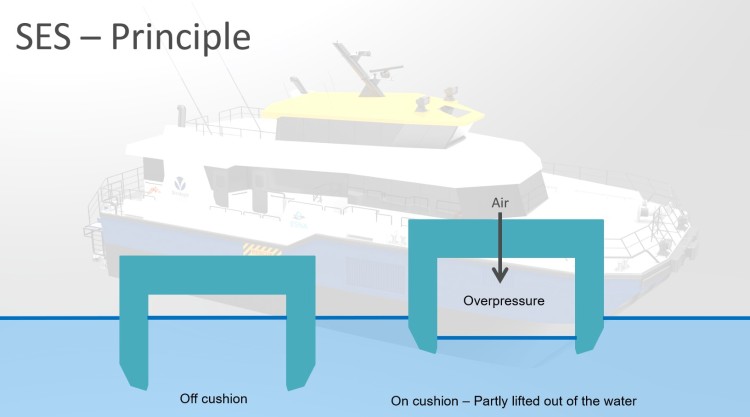
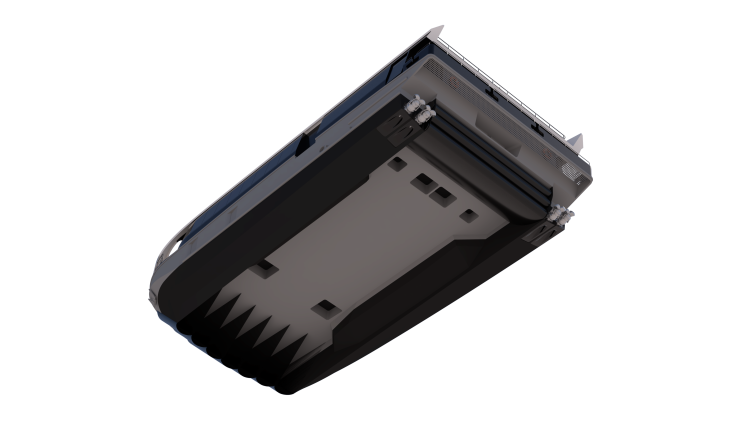
The air cushion is created by twin catamaran hulls, an inflated stern bag and rubber "fingers" at the bow. One or more fans push air into the cushion, and partly lifts the vessel out of the water. The air flow is controlled by dampers placed after the fan (lift fan damper), to restrict the flow into the cushion and one or more dampers to let air out of the cushion (RCS dampers).
ESNA uses two modes in operation of the vessel, RCS (Ride comfort system) mode for fast and comfortable travel, and MCS (Motion controll system) for safe transit to windmills or offhore installations. In RSC mode the lift fan damper are fully open to gain maximum effect of the lift fan, and the RCS damper are adjusting the the pressure inside the cushion to ensure we get the fastest possible speed and superb passenger comfort.
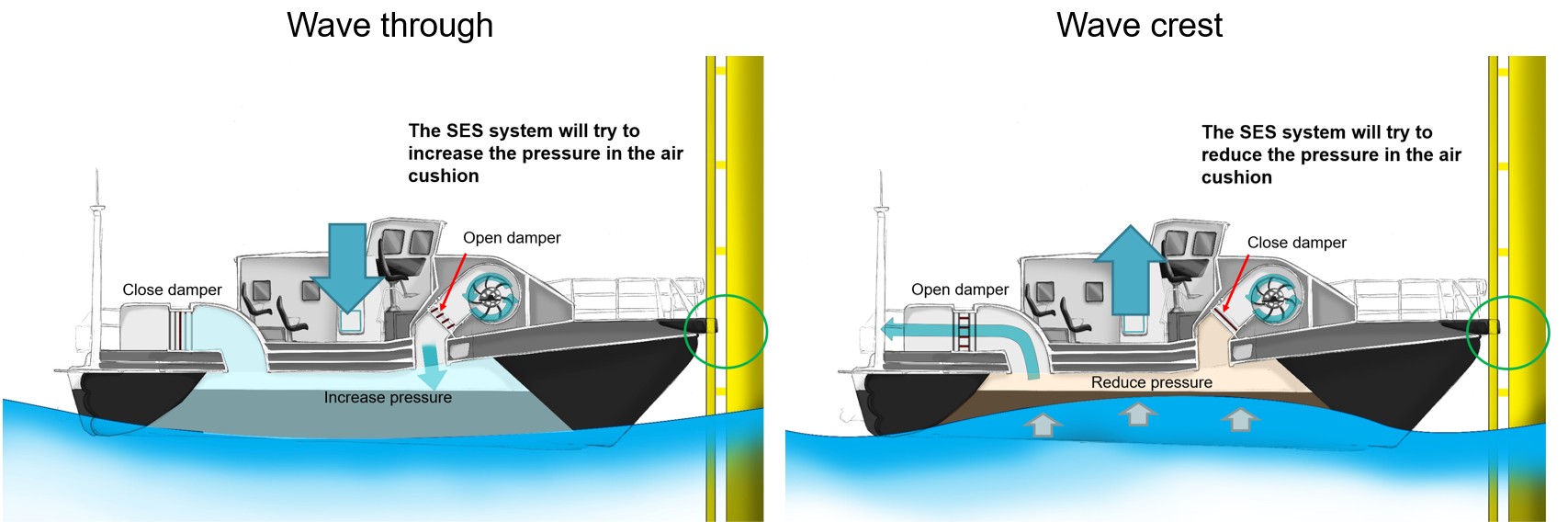
In MCS mode we use both lift fan damper and RCS damper to ensure the vessel bow are not moving with the waves.
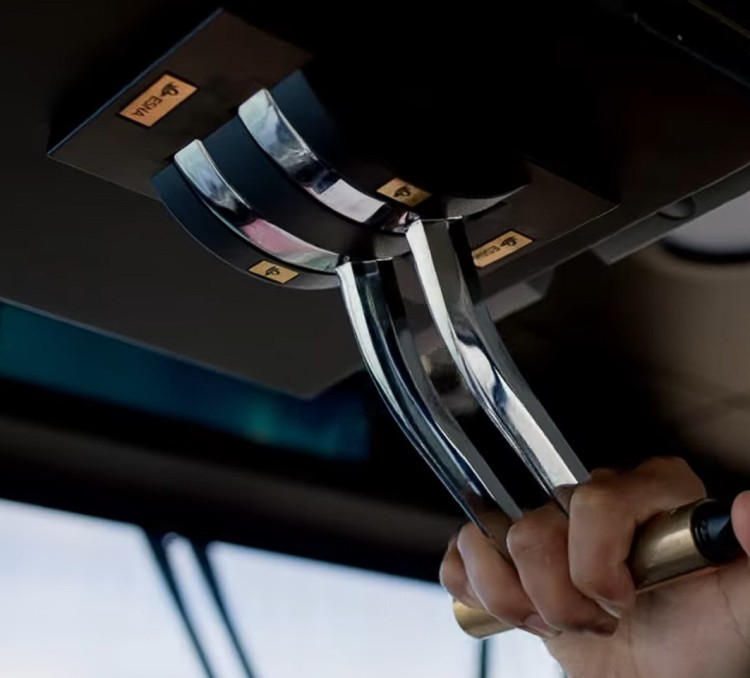
An ESNA design package consist of all design drawings and the SES hardware, including a state of the art control system with various sensors and HMI.